TL;DR: A toilet that won’t clear with a plunger, flange plunger, or a closet auger usually has an object or a paper mass stuck in the trap, and a licensed plumber can clear it in under an hour. If other drains in the house are also slow, or water backs up into the bathtub when you flush, the clog is likely further downstream in the main sewer line, not the toilet itself, and that calls for a camera inspection rather than another plunge.
If you’re standing over a toilet bowl that’s filling instead of draining, stop flushing it. Every flush adds more water with nowhere to go, and on the slab-on-grade homes common in Oleander, Westchester, and East Bakersfield, a full bowl is often one more flush away from spilling onto the tile. Shut the angle stop at the base of the toilet clockwise, then work through the checks below to figure out whether this is a five-minute job or a sign the sewer lateral needs attention.
The plunger isn’t working. What now?
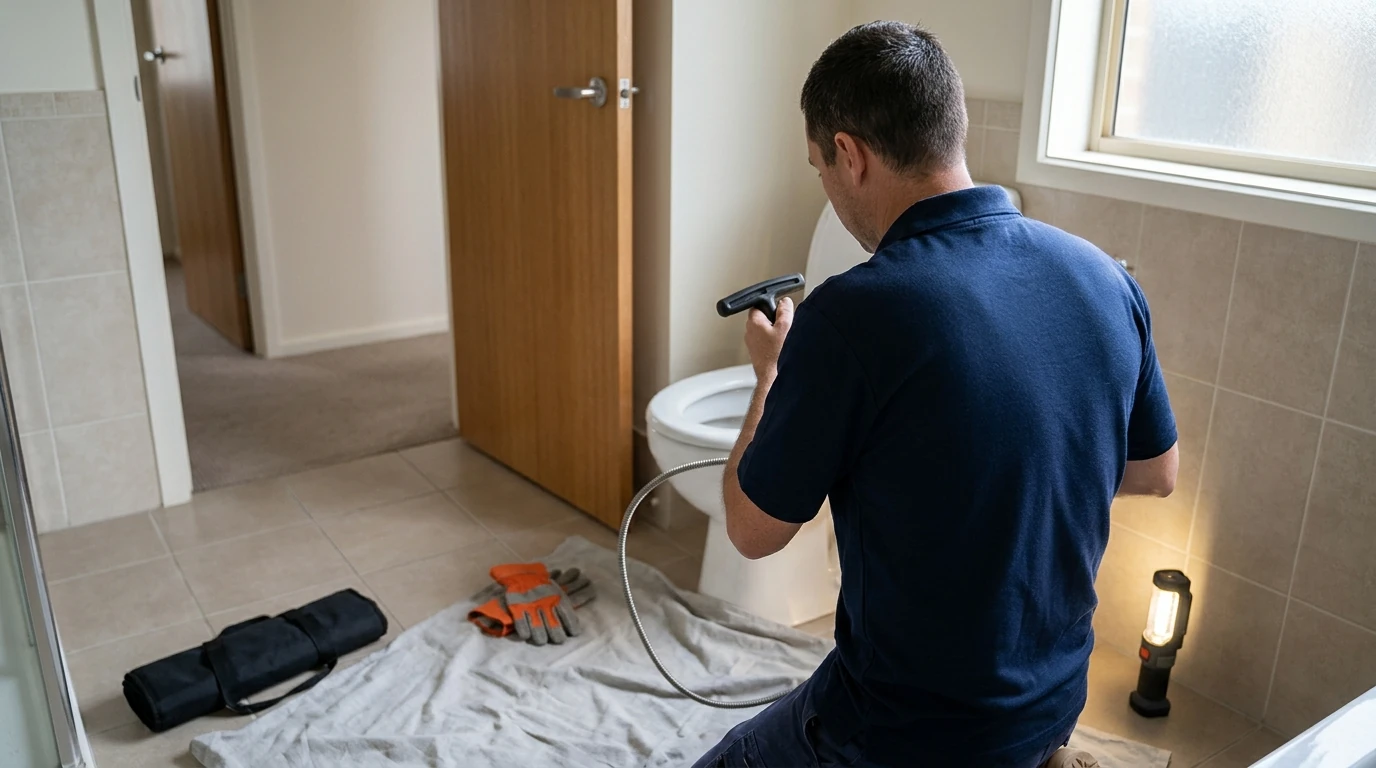
If a flange plunger hasn’t cleared the clog after 8 to 10 firm plunges, the blockage is probably past the toilet’s trap, and a manual or motorized closet auger is the next tool, not more plunging. A closet auger is a flexible cable in a curved sheath built specifically for toilets. It reaches past the trap without scratching the porcelain, which a standard drum auger can gouge.
Most single-toilet clogs come from one of two things in Bakersfield homes: an object that shouldn’t have gone down (a toy, a toothbrush cap, a “flushable” wipe that isn’t), or a paper mass that got dense before it could break apart. Low-flow toilets installed after a retrofit sometimes need a second flush to fully clear waste, and residents mistake a slow first flush for a clog. If the auger brings up resistance and then the water drops, you’re done. If the cable meets a hard stop a foot or two in and nothing clears, that’s worth a plumber’s camera rather than repeated attempts, since forcing it can crack the porcelain or push the blockage deeper.
The toilet is overflowing. Shut off the water first.
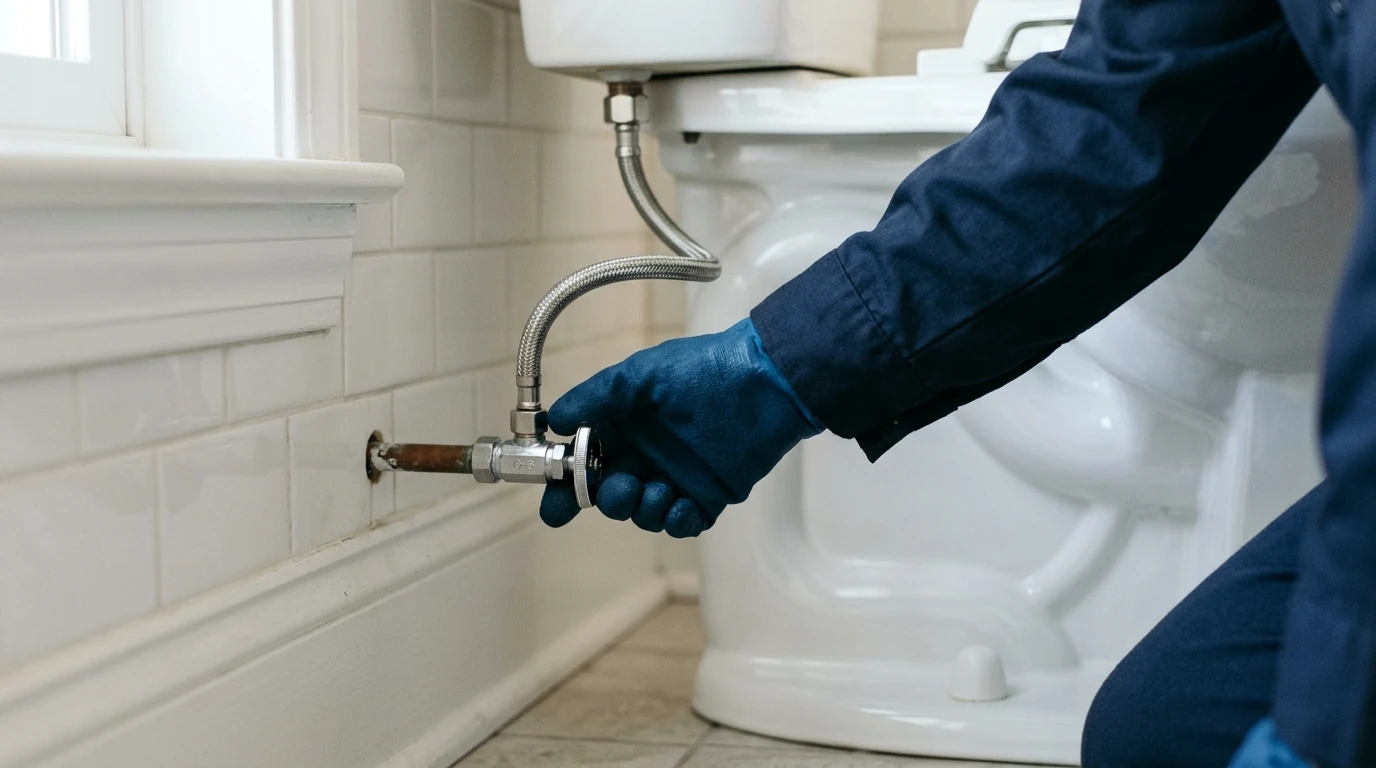
The first move with an overflowing toilet is closing the shutoff valve at the wall behind the toilet, not grabbing a towel. That valve, called the angle stop, is usually a small oval or round handle on the supply line a few inches above the floor. Turn it clockwise until it stops.
Once the water is off, remove the tank lid and lift the flapper to stop any remaining fill cycle. If water has already reached the floor, soak it up immediately with towels and open a window or run a fan; standing water on grout and baseboards can start supporting mold growth within 24 to 48 hours, according to the EPA. If the overflow spread past the bathroom, our sister company ProRestoration Services handles the drying and any rebuild, so the water damage and the plumbing fix don’t require two different contractors. For most homeowners insurance policies, sudden overflow from a clogged fixture may be covered, but check your policy since coverage and deductibles vary.
Toilet backing up into the bathtub: is this the main sewer line?
When flushing the toilet makes water, bubbles, or waste come up through the bathtub or shower drain instead of (or along with) the toilet, that is a main line symptom, not a toilet problem. It means wastewater has nowhere to go past a blockage downstream of where the toilet and tub lines join, so it’s backing up to the lowest or most accessible fixture.
This is a common call in older sections of Bakersfield where mature street trees have sent roots into clay or cast-iron sewer laterals over the decades, and it also shows up where a slab-foundation home has settled enough to create a low spot (a “belly”) in the under-slab pipe. A plunger or a closet auger will not reach this kind of blockage; it needs a main line snake run through the cleanout or a camera to see exactly where the pipe is compromised. For a closer look at the backup pattern and what to check before the plumber arrives, see our guide on a sewer backup in Bakersfield.
Only the toilet is clogged vs every drain running slow: how to tell
If only the toilet is affected and sinks, the tub, and the washing machine drain normally, the clog sits in the toilet’s own trap or the short branch line leading to it, a local fix. If multiple fixtures are slow or gurgling at the same time, especially ones on the lowest floor, the blockage is further out in the shared drain or the main line, which is a bigger job.
Run a quick test: flush the toilet, then run the bathroom sink and the tub for 30 seconds each. If the sink and tub drain normally while the toilet struggles, call it a toilet clog. If the sink gurgles or the tub drains slow while this is happening, you’re looking at a shared line issue. We cover a similar version of this test in our kitchen sink and shower drain posts, since the same branch-vs-main logic applies to any fixture.
Auger vs pulling the toilet vs camera inspection: what does the job actually need?
A closet auger clears the great majority of single-toilet clogs and takes a licensed plumber 15 to 30 minutes. Pulling the toilet off the wax ring is the next step when an object is lodged in the trap itself and won’t budge with an auger, or when a camera needs to go in through the floor flange instead of the bowl. A full camera inspection is reserved for repeat clogs, main-line backups, or any time root intrusion or a cracked lateral is suspected.
The Uniform Plumbing Code, maintained by IAPMO, sets minimum slope and venting standards for drain lines precisely because undersized slope or a failing vent is what turns a one-time clog into a recurring one. If the same toilet keeps backing up every few months, that recurring pattern is itself a signal to look past the trap. For a breakdown of when a plumber reaches for a snake versus a hydro-jetter on tougher clogs, see hydro jetting vs snaking.
Is this an emergency, or can it wait until morning?
A single clogged toilet with a working second bathroom can usually wait for a daytime appointment. A toilet that’s the only one in the house, actively overflowing, or backing up into other fixtures counts as an emergency that’s worth a same-day or after-hours call.
All Pro Plumbing Heating and Air answers calls 24/7 and can send a plumber for an overflowing toilet or a suspected main-line backup the same day, including after hours. If it’s a standard clog with other bathrooms available, booking a regular appointment during the day typically costs less than an after-hours dispatch. For the specific numbers on what each scenario runs, our toilet unclog pricing guide breaks down plunger-level jobs versus main-line work.
One call covers the whole problem. If a clog turned into standing water on the bathroom floor, the same visit that clears the drain can also connect you with ProRestoration Services for the drying and repair, so you’re not coordinating two separate companies for one incident.
About All Pro Plumbing Heating and Air
All Pro Plumbing Heating and Air is a licensed plumbing, heating, and air contractor serving Bakersfield, CA (license #960566), answering calls 24/7. Their technicians handle drain clearing, toilet repair, sewer line diagnosis, water heaters, and HVAC service across Kern County, backed by a 5.0 Google rating.
Need help now? Call All Pro Plumbing Heating and Air at (661) 863-9242.